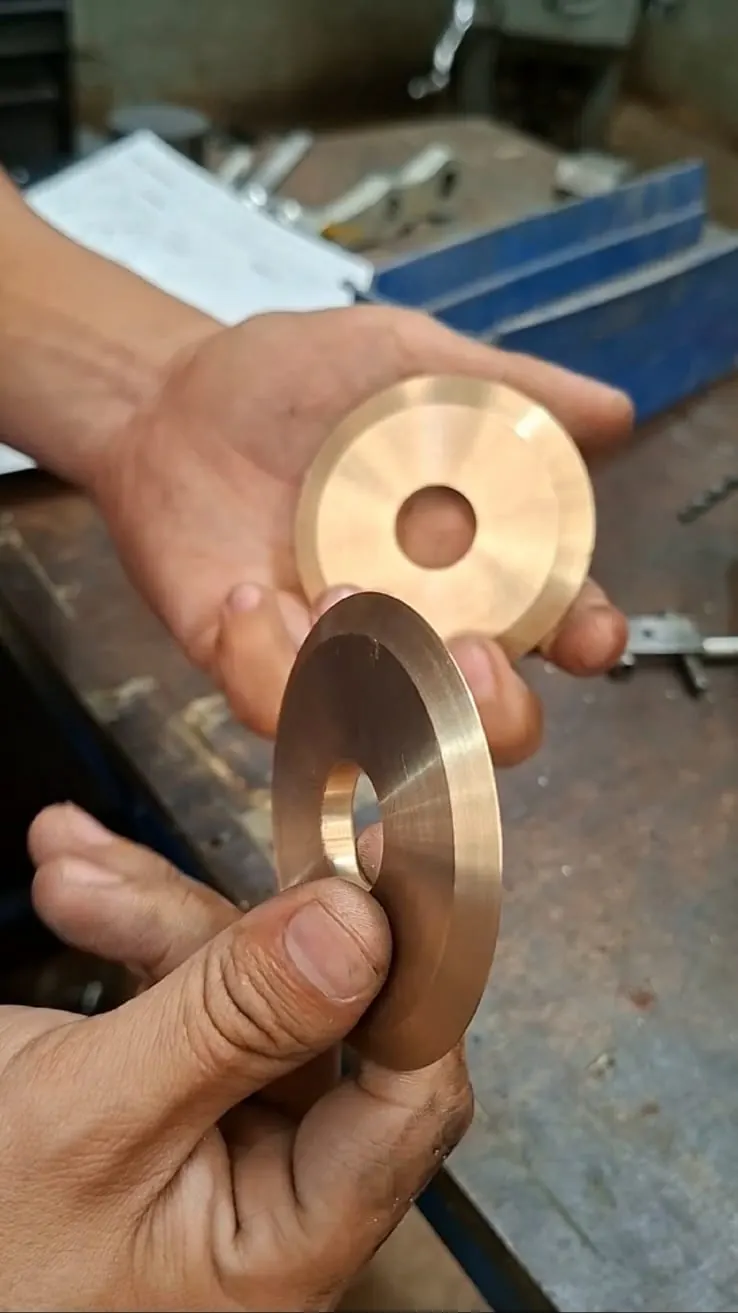
Bronze blades for polymer cutting
Conventional lathe machining of bronze blades for polymer cutting, with a press-fit bearing seat in Ensenada.
Challenge
Manufacture bronze blades for a polymer-cutting assembly while following the specified cutting angles and central bearing seat for a press fit. The drawing specified different tolerances for the part and its central area.
Solution
We took the dimensions needed to prepare a 2D drawing and machined the parts on a conventional lathe. Fixtures were used to produce the cutting angles, followed by press-fitting the bearing.
Process
- 1
Reference samples and dimensions
We reviewed the reference parts and took the dimensions needed to define the manufacturing geometry.
- 2
2D drawing
We documented the dimensions and specified tolerances for the part and the central bearing seat.
- 3
Conventional turning
We machined the bronze blades on a conventional lathe. Fixtures helped produce the specified cutting angles.
- 4
Bearing installation
We press-fitted the bearing into the central seat according to the fit specified for the assembly.
Result
Bronze blades were manufactured for the polymer-cutting assembly and the bearing was press-fitted. Tolerances in this case are drawing specifications; they are not presented as final measurement results.
Gallery: before → after
4 images in chronological order, from the starting point to the final result.
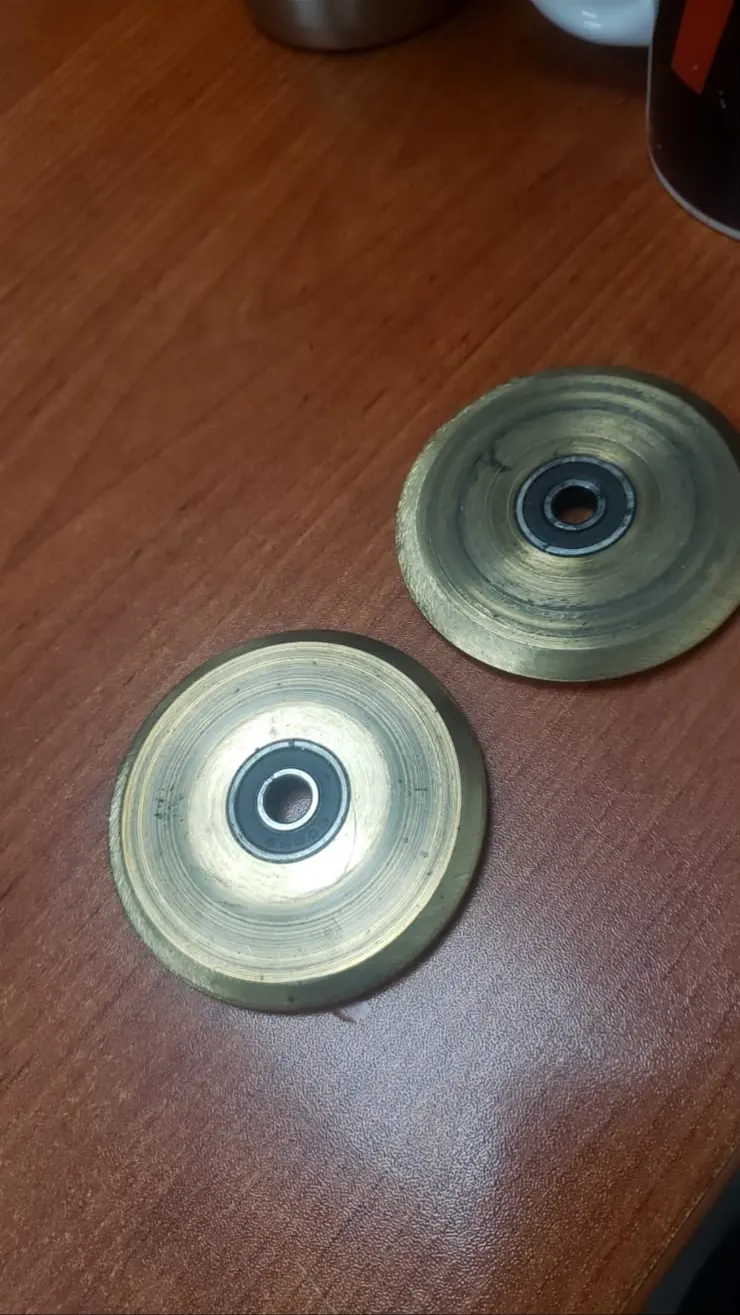
Reference samples and bearings
Reference bronze blade samples with bearings for a polymer-cutting assembly
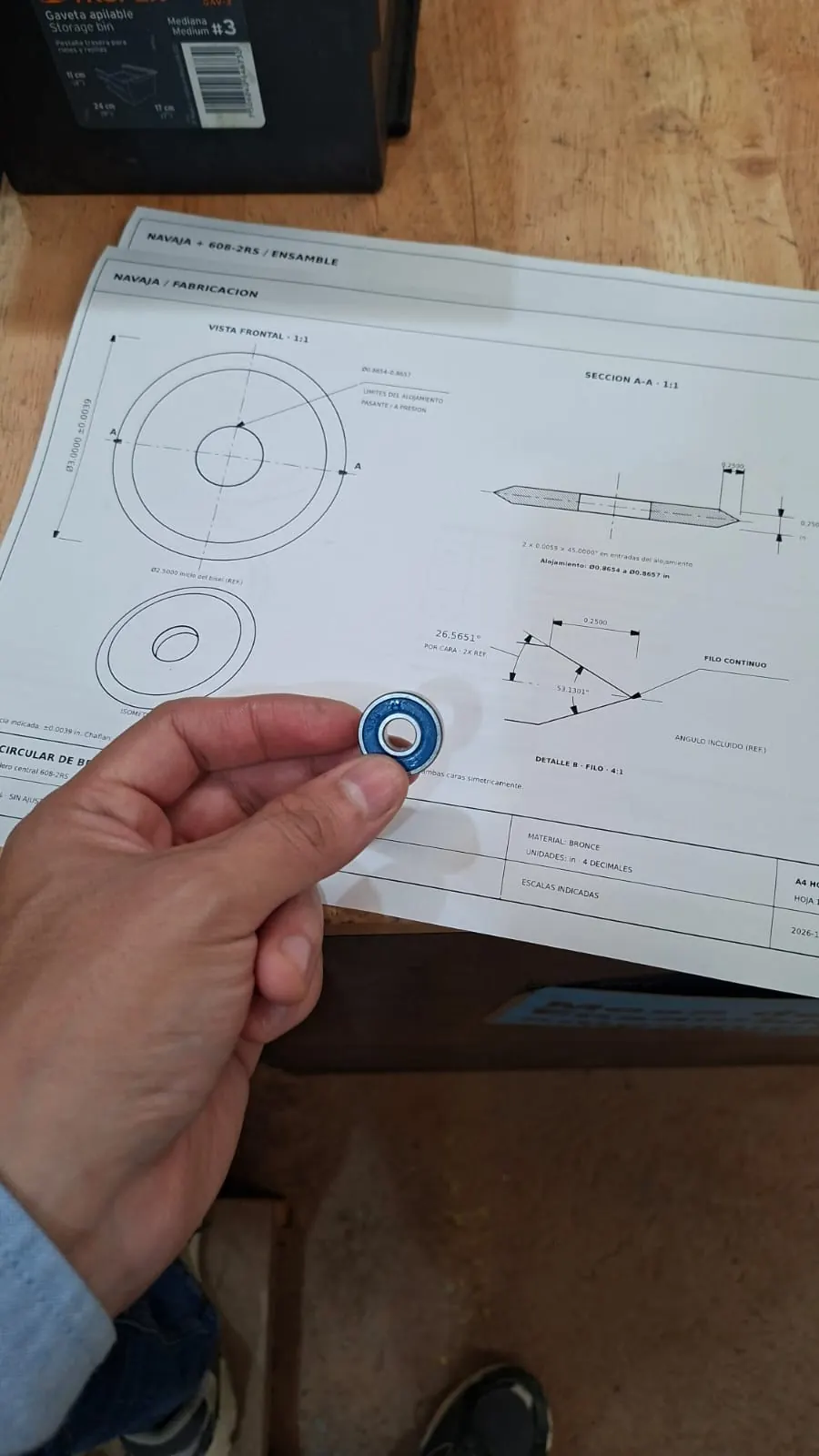
2D drawing and manufacturing dimensions
2D drawing of bronze blades with dimensions, cutting angles and bearing seat
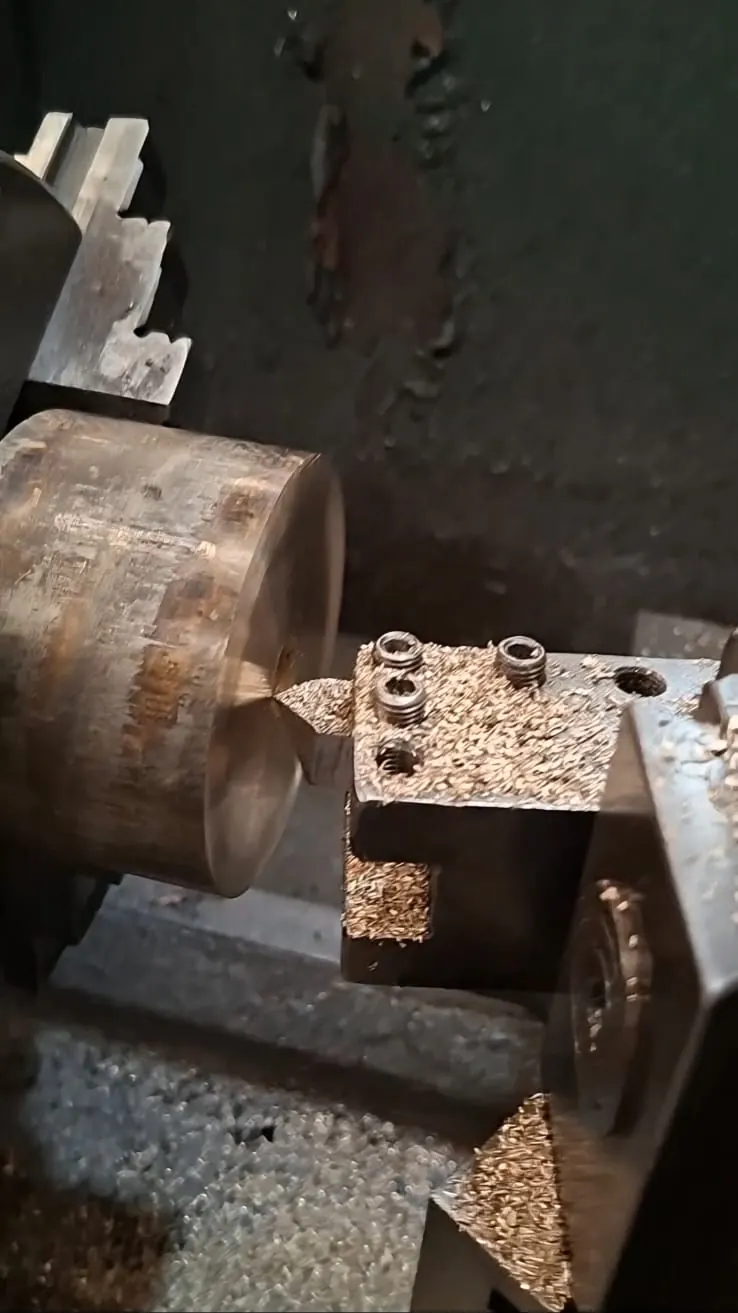
Conventional lathe machining
Conventional turning of a bronze part to make industrial blades
Machined bronze blades
Finished bronze blades for polymer cutting
Questions about this case
Which process was used to make the blades?
Conventional turning was used. Fixtures helped machine the cutting angles specified in the drawing.
Were the listed tolerances measured on the finished part?
No. ±0.002″ for the part and ±0.0005″ for the central bearing area are drawing specifications, not reported final measurements.
How was the bearing installed?
The bearing was press-fitted into the blade’s central seat.